

Riding the Rainbow: Nikita Goossens and Ype Driessen Write Fearless Stories
Would “Heated Rivalry” have been just as successful if Illya and Shane hadn’t ended up as a couple? In a context where people are craving gay romantic stories with happy endings, it does take some courage—fearlessness—to go against the spirit of the times. To question the ideal of the monogamous relationship. To question the ideal of the romantic relationship—whether with one or more people—in and of itself. That’s what Nikita Goossens does with “Tijd om te bloeien” and Ype Driessen with “Vanilla.” Each in their own unique way.
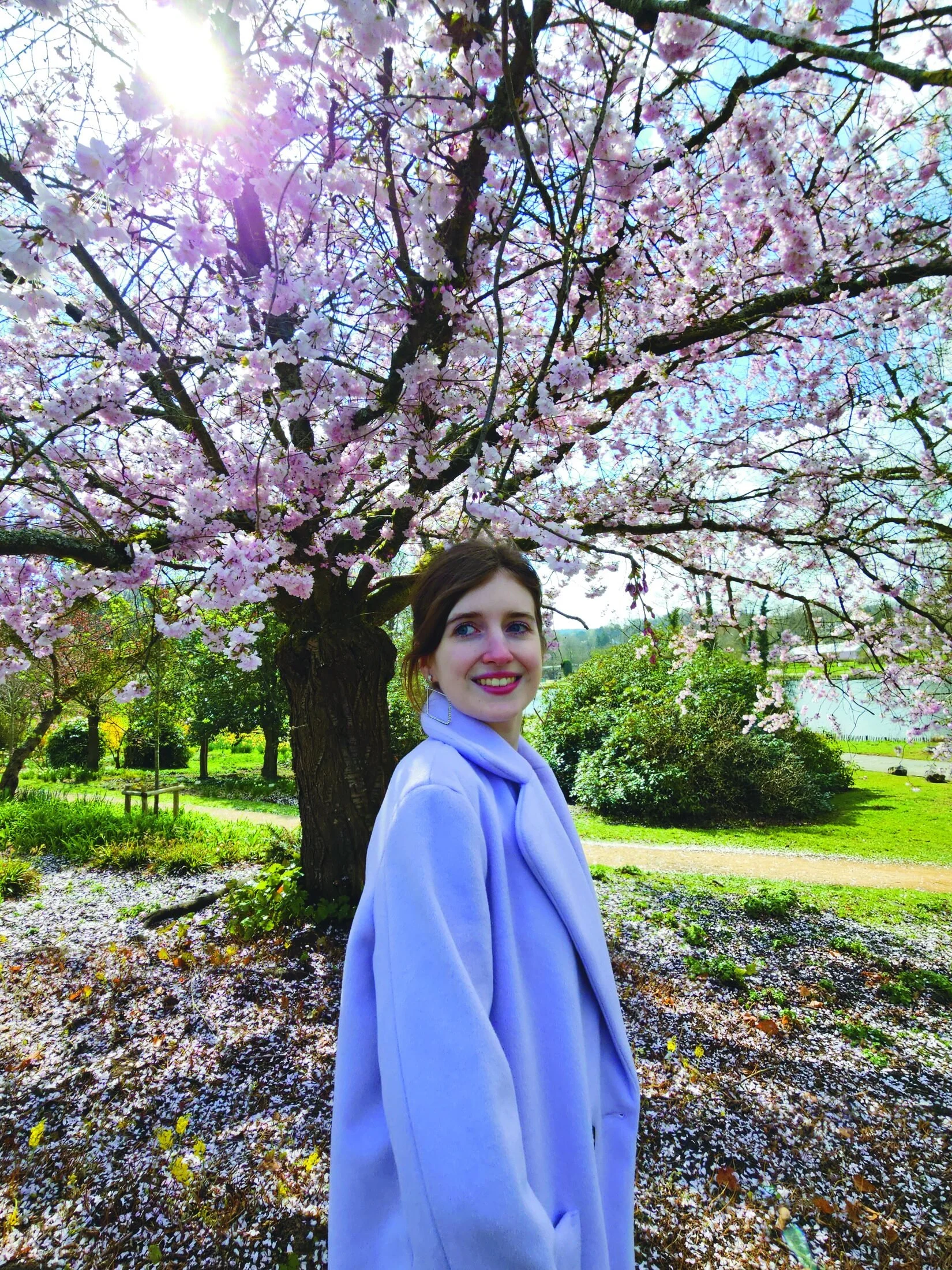
There are hardly any stories about aromanticism, so Nikita wrote one herself. Nikita Goossens (25) made her debut as an author in 2021 with the coming-of-age story *Op zoek*. In March of this year, her second book, *Tijd om te bloeien*, was published. In it, she deliberately chose very diverse characters and focuses on friendship between women. In “Tijd om te bloeien,” Lauren, an ambitious Belgian event planner, travels to Washington, D.C., to organize the famous Cherry Blossom Festival. But things don’t go quite as hoped. She’s underestimated by her male colleagues, has doubts about what she wants romantically, and doesn’t get along very well with her roommates—at least at first. Everything changes for Lauren when she gradually starts talking more with her roommates. In the process, she learns about aromanticism and asexuality, but she also learns more about her own position and privileges in society as a white European woman. As a Black, lesbian woman, Mai faces very different obstacles, just like Amanda, who is Mexican, the author points out. Ultimately, however, the three main characters discover they have more in common than they thought and encourage each other to be fully themselves.
Ride the Rainbow
It’s a novel in which friendship—not romance—takes center stage. “A lot of feel-good stories turn out to be mostly romances after all. Plus, they often end with a wedding and kids, and that’s exactly the kind of thing I really dislike,” Nikita laughs. “I’ve often thought that in books like that, I’d be better off stopping about ten pages before the end because that ‘ending’ suits me better. But I found a better alternative: I simply wrote the book I want to read myself, with characters who break out of traditional molds. Because if I want to read it, I’m sure I won’t be the only one, and there are other people out there waiting for it,” she explains.
Because aromanticism and asexuality play a prominent role in the story, the author hopes to foster greater understanding of these often somewhat overlooked orientations. “The concerns Lauren faces in the book will also be very relatable to anyone who identifies somewhere on the aromantic or asexual spectrum. Think of questions like, ‘Do I actually fit in with the LGBTQI+ community?’ or ‘Does this mean I’ll be left alone on this planet?’ Common misconceptions are also addressed, such as people who think ‘you just haven’t met the right person yet.’ That means it can also be very educational for people who aren’t familiar with aromanticism and asexuality,” says Nikita.
We need more representation
Furthermore, “Time to Bloom” also explores other forms of attraction, such as aesthetic and sensual attraction. In the aromantic and asexual community, this distinction is often emphasized because attraction doesn’t necessarily have to be romantic or sexual. “There’s actually another asexual character in my book who highlights the nuances within the community. Because it’s certainly not the case that the community has just one face,” says Nikita. “I do my very best to portray every community as accurately as possible when developing characters, based on extensive research and conversations. I see that as my responsibility as an author. But of course, I can never reflect every possible experience within a particular community. That’s why it’s important to have multiple writers tell different stories.”
*Loveless* by Alice Oseman—yes, the author of *Heartstopper*—has become something of a standard work for people who want to read about aromanticism. But aside from that, there aren’t very many other examples. “This orientation certainly still needs to catch up, especially in the Dutch-speaking world. I’m definitely proud of my contribution. If even one reader feels seen by my book, then I’ve achieved my goal. I want to share stories that truly mean something to people.”
Celebration of Sisterhood
Although the author sees her book as a feel-good story, she clarifies that the story is not set in an ideal society: “It does address some pretty heavy themes, ranging from the real threats faced by queer people to even a topic like (the fear of) femicide. Because although the three women in the lead roles come from very different backgrounds, they are still three women living in a man’s world, facing various forms of sexism. Yet it’s a hopeful story because the friendship and support they find in each other is deeply meaningful. They can share every setback and every victory with one another. Especially in a world that pits women against each other more than it gives them opportunities to connect, that’s worth a great deal. So *Time to Bloom* is a kind of celebration of womanhood and sisterhood. And perhaps the story’s ending even alludes to Pride. But you’ll have to read the book to find out,” Nikita concludes.
Nikita Goossens self-published *Time to Bloom* as a paperback and e-book on Amazon. You can order the book there. You can also find more information on her website and on her blog on Substack. You can find her on Instagram at @nikitasbookclub.
Ype Driessen: “Vanilla”
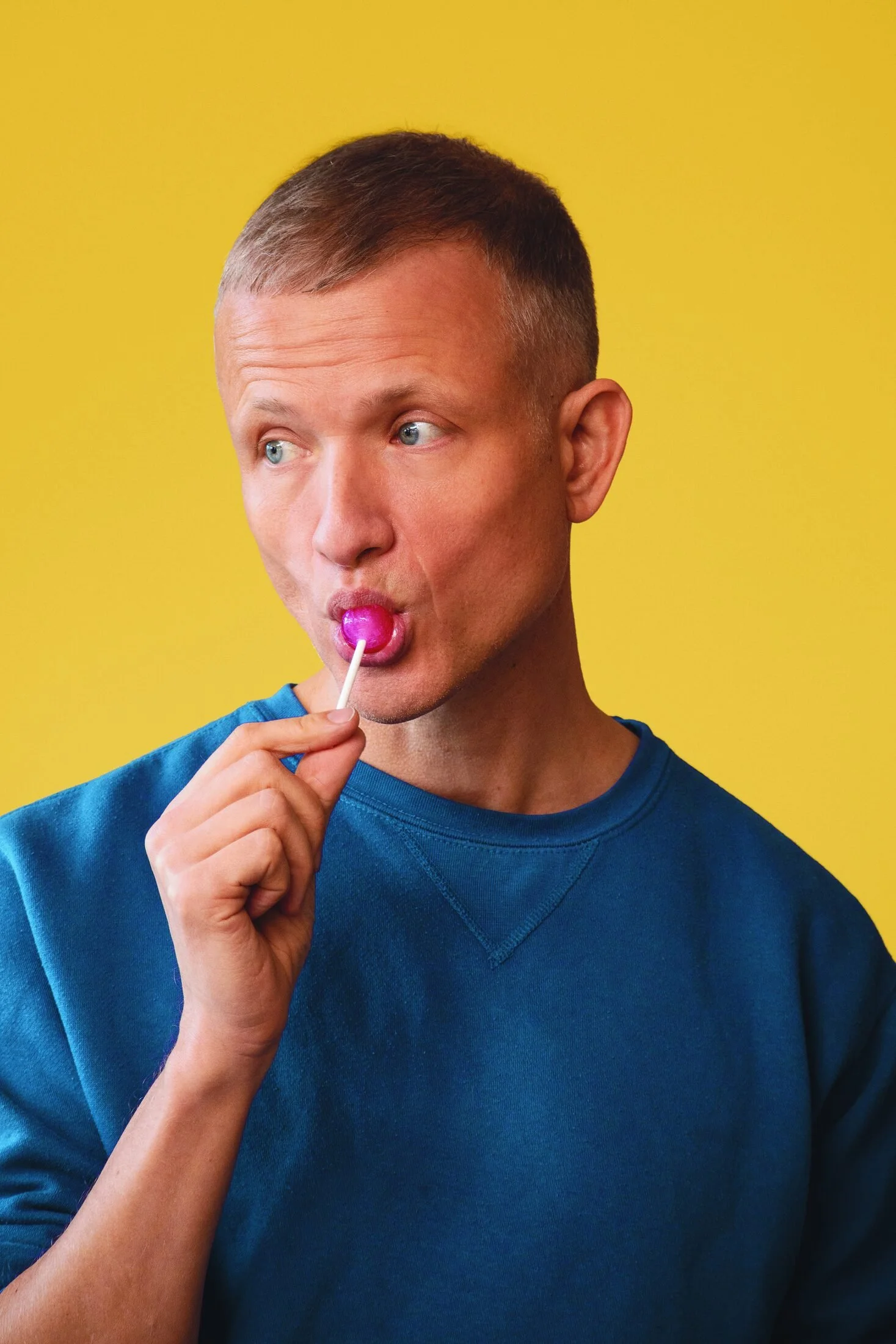
In February, comic strip artist Ype Driessen (49) published his first novel without illustrations, *Vanilla*. It’s a book about sexual self-discovery and liberation, about friendship, and about societal expectations. After a painful breakup, the somewhat neurotic Jip moves to Amsterdam with his two best friends. There, according to his friends, Jip can start enjoying life. But when it comes to sex, he’s never experienced anything exciting. He’s what they call “vanilla.” Jip would prefer to get back into a steady relationship as soon as possible—or better yet, get back together with his ex. But a mysterious figure makes him an offer: if Jip goes on twelve meaningless sex dates, he’ll be freed from his heartbreak. But are they really meaningless?
“Sex is a process of growth. The transformation Jip is going through is something that many gay men experience, but at breakneck speed,” says Ype. “In real life, it can take much longer. And in real life, too, you sometimes need a little encouragement from others to come out of your shell.”
“Vanilla” covers many themes, including the wide range of relationship possibilities. A conscious choice by Ype. Jip’s coworker Lieke is a happy single who finds it strange that single people have to justify themselves. After all, couples don’t have to justify themselves, do they? Roommate Guus, on the other hand, thinks he’s found “the one,” and Ramon takes on the role of scene queen who knows how it all works. But is that really the case?
Smut
Ype started writing “Vanilla” five years ago, back when smut—sexually explicit fiction—wasn’t as trendy as it is now. Think of the dom/sub movie “Pillion,” or the New Year’s Eve sensation: “Heated Rivalry.” To the chagrin of those who envy it, Ype didn’t think “Heated Rivalry” was a great series. “The series doesn’t give you any insight into gay life. It remains fantasy, a fairy tale. And the sex is too clean.” Something that isn’t the case in his novel.
Publishers weren’t exactly lining up to publish *Vanilla*. His longtime publisher of his photo comics, Luitingh-Sijthoff, was the one who took the plunge. They encouraged Ype to write a book without any illustrations. Ype developed an idea that came to him while he was on his way to a date. “Just like Jip, it kept going round and round in my head. Is this the right address? The right doorbell? What are people going to think I’m doing here?” “I didn’t find the sex scenes that hard to write. Throughout my entire body of work, I use a straightforward style. I describe behaviors that gay people find perfectly normal, but which are uncharted territory for the average straight person. A lot of fiction focuses on coming out or first love. But that’s not enough for me.”
Meaningless?
Jip has to go on twelve “meaningless” sex dates to get over his heartbreak. Twelve dates like the twelve labors of Hercules, with a Faustian Mephistopheles goading Jip on. That Mephisto makes Jip think about the meaning of sex. What is “meaningless sex” anyway? If that fleeting sexual encounter is exactly what you wanted or needed at that moment, is it really meaningless? “You can compare it to going out to eat: if you do it once a year and it’s a letdown, it lingers in your mind for a long time. If you go out to eat every week, you dwell on the disappointment for much less time because next week you’ll have a new experience,” Ype laughs.
Comments and Friendships
Ype’s friends recognize him in his literary work. Yet the reactions vary: “Some readers see the book as a kind of warning. Others think it’s just a really steamy story. One reader told me that after reading the book, he had ‘dusted off’ his sex life.” Friendship is an underlying theme in the story. “The three roommates each play a role in that friendship. But as Jip gradually embraces his gay identity more fully, he changes, and that creates tension because he steps out of his role.” That’s true in real life, too. “People don’t like change. Ramon, the self-proclaimed scene expert, feels overshadowed by Jip. He suffers from FOMO, and that’s when the slut-shaming creeps in a bit.”
Grindr plays a major role in Jip’s story. Jip spends a lot of time on Grindr—so much so that his friends and coworkers find it annoying. That happens in real life, too. “Actually, ‘Vanilla’ takes place about ten years ago,” Ype admits. “Because these days, Grindr isn’t as friendly. Just look at how many people delete the app only to reinstall it shortly afterward.” “Vanilla” is set in Amsterdam. The names of the bars have been changed. Club Church in Amsterdam was renamed “Club Hel,” the devil’s lair. Does Ype, who is in an open relationship with Nico, ever go to Church? “Haha, sure. I was just there last Saturday.”