

25 Years of Support at Het Roze Huis: “Today’s Problems Are More Complex”
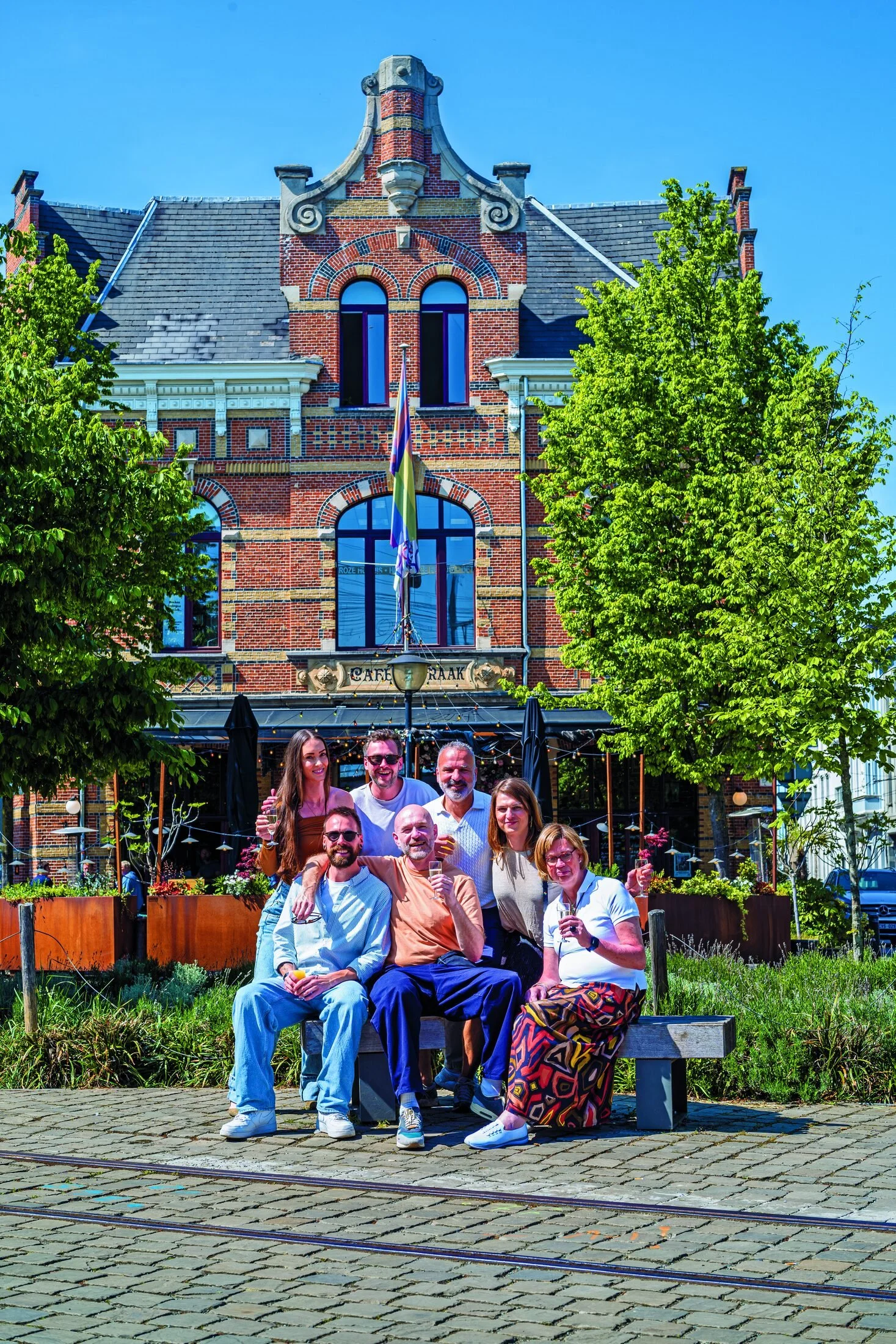
Anyone visiting Café Den Draak in Antwerp’s Zurenborg neighborhood on Thursday evenings between 7 and 9 p.m. will find a sign at the bar welcoming visitors to Het Roze Huis. You’ll always find two trained volunteers at a table. For the past 25 years, you’ve been able to turn to them for a chat about the sometimes difficult journey of self-discovery through the LGBTQ+ community.
Peter Nijst was there as a volunteer in the early years: “We used to talk about LGBT people; today, of course, the spectrum is much more diverse. After a few years, we started seeing more people from diverse cultural backgrounds during the intake process. They had different questions, and their situations were also more complex. In the next phase, we saw more transgender people, which in turn required a different approach. Over the years, we’ve regularly participated in training sessions, for example, on how to deal with people struggling with suicidal thoughts or who have experienced violence. We also organize more opportunities for volunteers to consult with one another. That way, we can learn from each other.”
These support sessions are skillfully facilitated by Anne Van Turnhout, who currently coordinates the outreach program. “The issues people come to us with today aren’t fewer—they’re just different and more complex. Their burdens are heavier; it’s about much more than just struggling with coming out. Often, they hope to find a new support network, but sometimes they just come to get things off their chest.”
Gilles De Schoesitter is the regular bartender at Den Draak and also volunteers at the reception desk. “Anyone who wants to can enter discreetly through the café’s side entrance. Our colleagues at the bar are extra alert on Thursday evenings when they see someone coming in alone. There’s a sign on the bar, and our volunteers are fairly visible, but some people hesitate to come in and end up walking around the café a few times. The intake interview is preferably held in the café, but upon request, it can also be conducted privately in a small room at Het Roze Huis.”
The number of consultations is on the rise. “More people are simply choosing not to just sit back and take it anymore,” says Peter. “Today, more than ever before, you get to choose how you want to shape your life.” What’s a typical consultation like? “We always let people get their story out first and foremost,” says Gilles. “Some stammer and hesitate, while others just let the words flow. Even today, we still see young people coming in for an initial consultation, despite all the digital options available.”
Usually, it’s just one conversation—after all, the reception volunteers aren’t therapists. However, they always make sure their conversation partners are referred; some find their way to one of the organizations affiliated with Het Roze Huis. Others come back as “regular” customers at the café. “Then we sometimes nod to each other from a distance,” Gilles smiles. “You can feel their pride: look, I’m here too.”
Twenty-five Years of Stories
The stories from the past twenty-five years are remarkably diverse. “Some people still come to ask how they can free themselves from their feelings,” Peter says. “I remember a couple—a boy and a girl—who were very much in love with each other but realized they had feelings for people of the same sex. I had to explain to them that those feelings would keep coming back, even though they clearly loved each other.”
Anne still remembers a conversation from two years ago very clearly. “Someone who was struggling with her gender identity walked into the café. She was looking for information because she really didn’t know anything about it. It started out as a difficult conversation, but that very same evening we were already experimenting with wigs and makeup. She came back regularly, and today we often see her on the café’s patio. She’s since changed jobs and is in the process of transitioning. It’s wonderful to see how much progress she’s made in such a short time.”
You can contact the reception desk at onthaal@hetrozehuis.be. Every Thursday evening, two volunteers are available at Café Den Draak on Draakplaats in Antwerp, from 7:00 p.m. to 9:00 p.m. You’re welcome to make an appointment, but it’s not necessary.