

City Poet Esohe Weyden Writes a Poem for Antwerp Pride
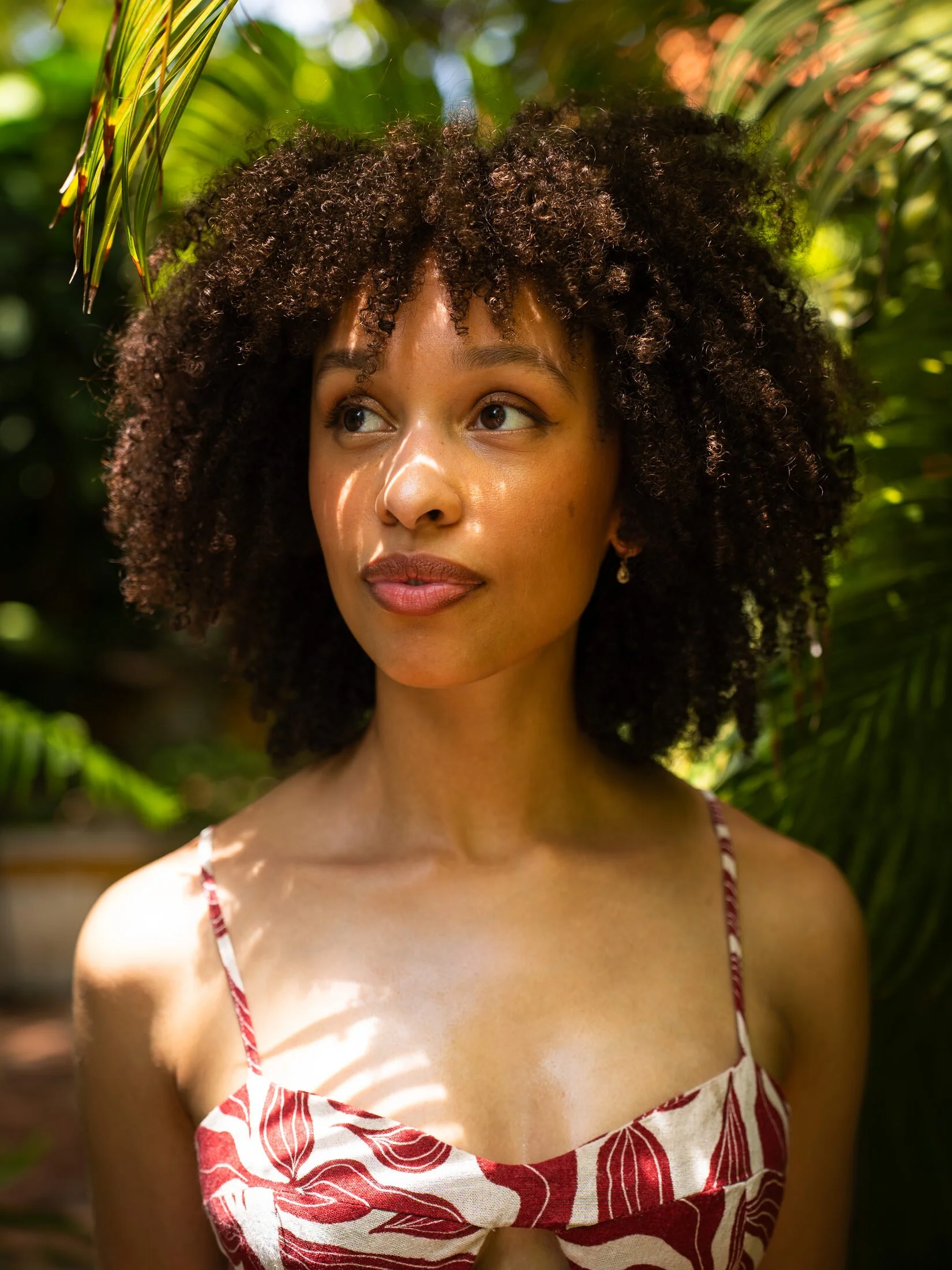
Being fearless can also mean becoming Antwerp’s city poet. In 2025, Esohe Weyden took over the mantle from Ruth Lasters, who—a few years earlier, following a conflict with the city government at the time—had literally performed the famous Antwerp verse “with all the Chinese.” Since then, Esohe has left her mark on the city. You can find her work, among other places, on the facade of the Permeke Library, at the Mayer van den Bergh Museum, at the Middelheim Museum, and in Runcvoort Park in Merksem. This year—and we’re very proud of this—she’s writing a poem for Antwerp Pride that she’ll recite during Pride in Town.
You have a background in law, journalism, and poetry. What do you see as the connection between those fields?
“Language. In everything I do, I want to think, write, and speak. When that combination is present, it makes me very happy. As a young girl, I stumbled upon poetry in the library, and I’ve been fascinated by it ever since. I find it remarkable how much you can say with just a few words. The process of refining something until it feels right gives me a great deal of satisfaction. I think poetry is also a very effective medium today. These days, everything moves so quickly in the media. If you take a moment to read something, create a moment of stillness, and reflect on what you’re reading, it can bring a sense of calm. It’s a format that suits me well.”
Are current events an important source of inspiration in your work?
“Not always. It often stems from feelings or events. Feeling something is one thing, but putting it into words is another. I hope people can relate to that or find comfort in it.”
You're currently writing a poem for Antwerp Pride. Where are you starting from?
“Actually, it’s based on themes that are important to me, such as racism and inclusion. For Pride, the focus is also on those themes. Unfortunately, the idea that we live in a fully inclusive society isn’t true yet. On the contrary. Intersectionality is an important starting point in my work.”
How will you present the poem during Pride in Town?
“Like a spoken-word performance, together with a musician—probably a pianist. That combination can convey the emotions even more powerfully.”
What role does the LGBTQI+ community play in your life?
“I work in the cultural sector and have many friends and colleagues in the community. There are also people in my immediate circle who identify as LGBTQI+. That makes it something very close to my heart.”
The theme of Antwerp Pride is “fearless.” How fearless are you?
“Not one hundred percent. There’s always a little voice that has doubts. But I try not to let that take over, and to still stand up for what’s important to me and say what I want to say.”
Did you hear that little voice in your head when you were asked to be the city poet?
“Absolutely. All the commotion surrounding that position made me hesitate for a moment. But in the end, I listened to my gut and decided to go for it.”
Is Pride new to you?
“No, I’ve been marching in the parade for years. But this will be the first time I’ve written for it and performed. That does make it special.”
Intersectionality, or intersectional thinking, is an analytical framework for understanding inequality (and thus potential discrimination) as something that arises from the intersection of various personal characteristics: gender, ethnicity, social class, sexual orientation, disability, and so on.