

Selm Merel Wenselaers: “The world is heading into a deep winter, but summer will come again someday”
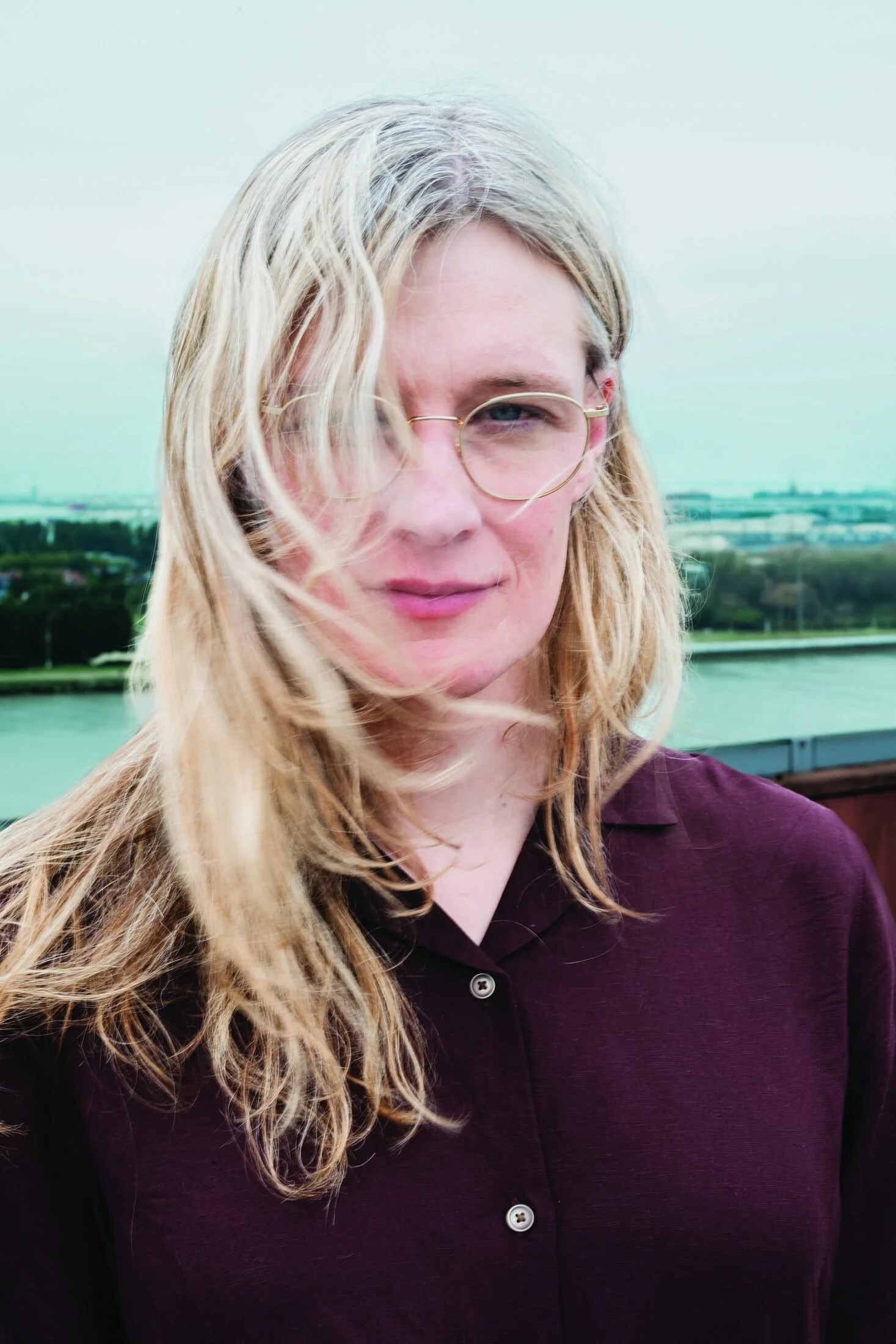
Widespread polarization and even the questioning of hard-won rights: unfortunately, this is what characterizes our society today. Trans people, among others, are facing significant challenges worldwide. Ten years ago, Selm Merel Wenselaers spoke openly in the media about her transition. Now she shares how she has seen the discourse change.
In 2010, Selm decided to officially begin her transition. “Of course, the process had already been going on inside me for years. I had long wondered whether the body I was born with really suited me. When I was 27, I finally dared to take the formal step and reached out to the gender team,” says Selm, now 43. “When I first entered that world, there were still fairly rigid pathways where you had to commit to the entire process. After all, everything was still relatively new. So you couldn’t really specify which changes you did or didn’t want—à la carte treatment didn’t exist yet. But gradually, that changed for the better. I sensed that a kind of optimism prevailed around the whole topic in the years that followed, influenced by new waves of thinking about gender and the accompanying new jargon. Today, on the other hand, that seems to have completely reversed. It really feels like a whole different era.”
A Society of Seasons
Whereas in the past, many people were still curious—in a generally positive way—about what it means to be a trans person, today’s debate is marked by toxic language and hate speech. “I remember that back then, I seemed to have to give a lot of ‘master classes’ to people around me,” Selm recalls. “The reactions were usually positive and supportive. Sometimes there was an uninformed comment that I would now consider transphobic. But overall, I didn’t really feel rejected back then.”
Selm feels less optimistic about those who are transitioning today. “There’s so much going on in our world that everything that seemed to have been achieved is now being called into question again. It’s sometimes said that our society goes through seasons. We can view the years between 2010 and 2020 as spring and summer, especially for trans people. In 2014, for example, Laverne Cox became the first trans woman to appear on the cover of *Time* magazine. That period can be compared to the optimism and openness of the 1960s and 1970s.” But unfortunately, spring and summer are followed by a period of fall and winter. “In the 1980s, this was due to the AIDS crisis, which brought with it social stigma and a great deal of grief. And I fear that since 2020, we’ve once again been in a global fall, moving toward a deep winter. The first signs appeared earlier: Trump’s first rise to power, the entire Brexit saga. Then came the pandemic, followed by wars. And I fear that things won’t get better anytime soon.”
Nuance Is Disappearing
You might wonder whether this decline is spilling over from the United States via the internet. But Selm doubts that. “It has been demonstrated time and again that millions are changing hands in the anti-LGBTQI+ lobby in Brussels. We shouldn’t be naive about this. Those funding streams often have religious roots and can be traced back to the U.S., but also to Russia and Brazil. You also see that people in Belgium and the Netherlands—people you wouldn’t expect and who have absolutely no connection to the issue—are suddenly starting to write about how, for example, you shouldn’t be allowed to call a uterus a uterus anymore.”
Selm keeps seeing the same oversimplified issues crop up, such as making fun of gender-neutral pronouns, who should use which locker room or restroom, and the never-ending debate about trans people in sports. “But how many people actually aspire to win an Olympic medal? Let’s be honest,” Selm says, exasperated. So the necessary nuance is often missing, and it seems particularly difficult these days to even talk about the real heart of the matter. “The world works completely differently now. Everything revolves around clicks and likes, even in all kinds of news media. That’s a shame, because in the early days of the internet, forums were very important to me for finding like-minded people. It’s really unfortunate that something that contributed so much is now coming back to haunt us.”
Everyone's an expert
Selm finds it striking that trans people affect people so deeply. “Such degrading caricatures are drawn of trans women. But why? What exactly are we taking away from you?” she wonders aloud. At the same time, she finds it fascinating and is able to show a degree of understanding. “I’m a historian by training, and maybe that’s both a curse and a blessing. I try above all to understand all these developments, even if they make me angry and hurt me. When people react defensively, it often has something to do with their personal lives. By engaging in conversation, I quickly figure that out. It would be easier to see those people as ‘thoroughly bad.’ But it’s not that simple. It’s often about nostalgia for a certain world as people remember it. And then trans people become a sort of focal point to indicate that that’s when things started to go wrong. But of course, being trans is nothing new at all. It just became more visible.”
What Selm definitely finds confusing are highly educated people who express negative views and back up their arguments with very substantive reasoning. “Ultimately, for them, too, it comes down to a certain nostalgia or dissatisfaction with how their own lives have turned out. But the problem with these people—just like with social media influencers—is that they present themselves as great experts and make their arguments sound plausible if you don’t listen very carefully. Ultimately, though, they’re all just laypeople who suddenly start talking about neuroplasticity and chromosomes. That’s something very strange.”
Dialogue Remains Important
It’s admirable that Selm continues to engage in dialogue, but for her, it’s second nature. “There are so many pioneers who have made great sacrifices for our community; the least I can do is keep the conversation going. Besides, I’m in a bubble of people who are somewhat like me. But so many others are in a very different position.” Selm facilitates monthly group discussions for young people, from which she says she learns a great deal. “All those intersections are represented at the table, and I listen to stories from young people who work at a postal service or flip burgers at a restaurant. These are people who are highly visible every single day and constantly have to explain their existence to those around them. From what I hear, they do that time and time again with patience. So it’s important that I do my part, too.”
What’s more, she sees no other option. “In America, we see that migrants are paying the price for everything that goes wrong in the world. They serve as the proverbial canaries in the coal mine. But who will be next in their sights? That’s right—our community. Suppose the far right gains ground everywhere. That’s something I do think about.”
Pride can be a celebration
Still, Selm is also hopeful. “The belief that after a global fall and winter, summer will eventually return definitely helps. Here and there, you’re already seeing progressive counter-movements, such as the election of Mayor Mamdani in New York City. Looking outward also does you good: on social media, everything is pretty dramatic, but on the streets, in practice, little has changed.” Finally, she says, Pride gatherings also offer relief. “I always thought Pride should primarily be a protest, focusing on politics and the ongoing struggle. But I now have to acknowledge that Pride is also a celebration, which is very welcome in these times. Perhaps that, too, is a form of resistance today: continuing to celebrate, even as the world grows harsher.”